
I have long turned to nature when I need to feel small. When I need to understand that the trees were here before I was and that they will be here for a long time after, I head for the hills. Sometimes, I need to feel small to reduce overwhelm and it is in my insignificance that I find my substance. During my cancer journey, I have found quiet companionship in the natural world. Nature became my medicine, acting as an ancient healer that asked nothing of me except that I show up, breathe, and listen.

Trees are great teachers, reminding us that strength is not about resisting the storm but about bending with it. They stand solid in the earth and when close to other trees, they whisper gently in the wind. Their roots signify connection, belonging and groundedness leaving me feeling a sense of being held by something larger than myself. In their presence, I am never alone. The trees offer a community of care offering me a place where I mattered simply because I existed.
Thanks for reading! Subscribe for free to receive new posts and support my work.
Walking 100 Miles in November
In November, I walked 100 miles for Myeloma UK. I have Myeloma. Me and 32,999 other people in the UK. Incurable but treatable is how it is described at diagnosis. Make of that what you will. But when rampant, the pain is excruciating and just a few months ago, I thought that I would never walk in the hills and the fields and the mountains again. Then they put me on a clinical tiral and once again I find myself in the heart of nature.

It was wonderful. I found a 3 mile circular walk from my house, through fields and walkways that offered the most beautiful visual imagery of Autumn at its best. I was reminded that walking for me is full of ritual that calms, connects and reminds me who I am. One foot in front of the other. Choose my own pace. Feel accomplished when I make it to the top of a hill.
Belonging in Nature
I feel like I belong when I’m in nature. Indigenous peoples often describe their relationship to nature as one of belonging, kinship, reciprocity and stewardship, rather than capitalisms’ delight in extraction, ownership and exploitation. This is expressed through practices and philosophies that see humans as part of the living world, not separate from it. The relationship with nature is not only spiritual but also practical; defending land against destructive industries, preserving biodiversity, and adapting to climate change. Indigenous ways of seeing the world remind us that belonging is not just human-to-human, but that it is also human-to-earth-to-human. We belong in nature simply because we are part of the living world.
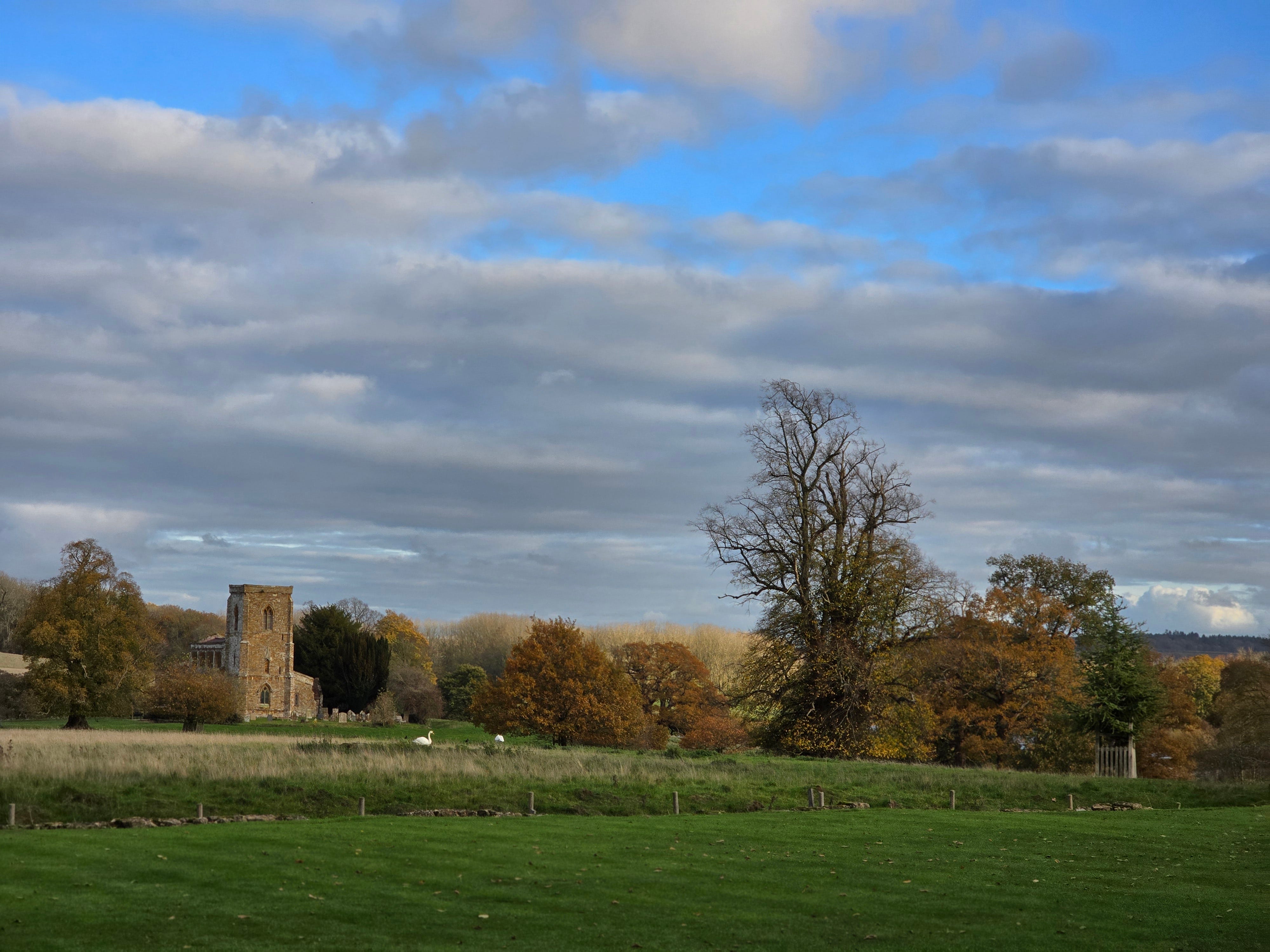
Nature holds a space for me in my fragility and my strength. When treatments stop working, which they will, I know that I can close my eyes and I will remember the extra time I have been given and be able to draw upon how I felt when I was out walking.
Wisdom in the Journey
Nature can teach us that healing is not linear, but cyclical. That belonging is not earned, but inherent if we know how to find it. The support we need in our lives can be found in the silent presence of trees, in the steady rhythm of walking, in the shared purpose of stewardship.
As I walked those 100 miles, I carried with me the knowledge that every step was supported not only by my own determination, but by the earth beneath me, the trees beside me, and the community I walked for. Even in illness, I am part of something vast and enduring. And in walking, I discovered that belonging to nature is not a destination, but rather it is the journey itself.
To start a conversation about how we might work together to make a difference, contact lyndsaypa@lisacherry.co.uk
Some of my time is spent delivering keynotes and this morning, I spoke at the Birmingham Virtual School Conference. I love Virtual Schools and for those of you who think I’m talking about a school that operates online, let me explain. A Virtual School in the UK is a local authority-led service that supports the education of children and young people who are in care, those who have been adopted and those who have a social worker. It doesn’t exist as a physical school but acts as a vital bridge between education and children’s services and is entirely focused on the education of the children and young people it supports. This is achieved through tracking their progress, promoting high aspirations and working closely with schools, carers and social workers to ensure that they receive the support they need to thrive academically and emotionally. A statutory service since 2014, it has changed lives - I have no doubt about this at all.
Focusing on belonging and mattering when we’re considering any children living with the legacy of trauma is essential if we’re going to think about healing from trauma. Doing this also seeks to ensure that the children and young people we are talking about are not (re)traumatised by any of the multiple systems that they find themselves in.
Why Belonging Matters
Belonging is about being received and accepted, being held in mind, being seen. For children whose early experiences may have included neglect, abuse, loss or repeated rejection, belonging has not just been disrupted; it may simply have never been accessed at all. It’s complicated, of course, and I don’t wish to oversimplify ‘belonging’, but as it is a human motivation (Baumeister & Leary, 1995). In a nutshell, this means that we will find somewhere to belong to, regardless of whether it will be healthy or unhealthy for us.
Belonging that is healthy for us offers a sense of “I am wanted here,” which helps soothe the nervous system and reduce hypervigilance. It also helps to shape a coherent sense of self.
Why Mattering Heals
I’m noticing how mattering is entering this discussion as an aspect that furthers how we think about belonging. I was introduced to Flett (2025) who researches and writes on mattering in respect of children and young people and immediately incorporated it into my own framework for practice. Matering goes beyond inclusion and says ‘you are significant’, ‘your voice counts’, ‘your presence changes things’. ‘You matter’.
For children and young people living with the legacy of trauma, they may have internalised messages that tell them that they don’t matter, rendering the experience of mattering revolutionary. It tells them that they deserve to be heard, that their existence makes a difference, rather than being a burden.
Trauma Recovery
Childhood trauma disrupts connection and teaches children that the world is unsafe, that people can’t be trusted and that asking for help is futile and therefore, they must fend for themselves. Healing can be found in being seen and cherished in relationship. Belonging and mattering support integration alongside emotional regulation through fostering safe attachments in order that relational resilience can be built.
In Conclusion
Every child, young person and adult deserves to feel they belong. This is about us all. None of us can function properly if we don’t feel that we belong or matter. Imagine for a moment the sensation of not belonging and that you didn’t matter.
Every young person deserves to know they matter. For those living with the legacy of trauma, belonging and mattering are lifelines, protective buffers and provide a healing opportunity! When we centre belonging and mattering in our settings, services and systems, we can really make a difference!
We can make a decision to be the people who say, with our actions and our presence, ‘you are not alone’ ‘you are not forgotten’. ‘You deeply, irrevocably, wonderfully matter and you make a difference here.
To start a conversation about how we might work together to make a difference, contact lyndsaypa@lisacherry.co.uk
Interdisciplinary Insights
How we think about and understand a subject, any subject, can be rather limited (forgive me for saying) unless we dare to step into other genres and disciplines. Quite honestly, it can be a bit intimidating to confront a whole other body of knowledge that lies outside our own frameworks and theories for understanding the world. My work has always sat firmly in sociology, education and social work (with rather large dollops of psychology). However, for my doctorate, I needed to wander into the mind-blowing world of philosophy and the vast world of geography, two areas that I have had little relationship with. However, the riches of this venture are vast, almost like travelling to another country. Alongside this, it has become increasingly impossible to consider belonging without thinking about mattering, a shift that can be attributed to the work of Flett (2025).In this post, I will briefly introduce belonging and mattering across different academic disciplines.

General: Belonging
Anyone who has an interest in belonging will know that it is widely understood to be an intrinsic human need (Baumeister & Leary, 1995). You are unlikely to read any work on belonging where Baumeister and Leary aren’t referenced. However, if we look at research across different disciplines, we can add more depth to this understanding. We will see how belonging is woven into the fabric of place, identity and power. To belong is not merely to be present; it is to be recognised, included and accepted. To matter is not simply to exist; it is to feel that one’s presence makes a difference and that we are significant. That our experience of these aspects of being human are fragile and transformative.
Education: Belonging in Schools and Universities
Studies in education highlight belonging as a critical factor in student engagement, well-being and retention. The extensive work of Kelly-Ann Allen in this area shows that belonging in schools is not automatic; it must be cultivated through pedagogy, staff support and inclusive cultures (2025). Yet belonging can be undermined by stereotyping, invisibility or systemic inequities.
Belonging in higher education has become a central theme in contemporary research, recognised as a powerful determinant of student engagement, wellbeing and retention. Critical reviews (Gilani & Thomas, 2025) show that belonging is shaped by multiple factors such as inclusive pedagogies, supportive staff relationships, peer networks and institutional culture. However, students often encounter stereotyping, invisibility, or exclusion, particularly those from marginalised or working-class backgrounds.
For newly qualified teachers, especially those from working-class backgrounds, the classroom becomes a threshold: between student and professional, insider and outsider (Smith, 2026). Here, belonging is a daily negotiation, where their contributions only begin to matter when their contributions are valued rather than overlooked.
Geography: Place-Belongingness and Migration
Drawing upon Antonsich (2010) in my research helped me shape an understanding that belonging must always be understood as both place-belongingness (a personal, emotional attachment to place). This contributed to my FACES PLACES SPACES conceptual model (Cherry, 2025) to ensure a broader perspective on the areas that we must visit to cultivate belonging.
The politics of belonging (the discursive and institutional boundaries that regulate inclusion) help us grasp who gets to belong and how! This lens has been taken up in newer geographical work, showing how belonging is constantly negotiated in contexts of migration, urban change and environmental displacement. In this way, geography reveals belonging not as a fixed state but as a process of navigation, reminding us that belonging is deeply tied to place.
Recent work (GeoJournal, 2024) distinguishes between place-belongingness, the felt sense of being at home, and the politics of belonging, as mentioned above, the structures that decide who is included or excluded. Migrant youth studies (MDPI, 2023) show how belonging is relational, constructed through community ties and cultural practices. Belonging is understood as fragile, yet mattering emerges when young people’s dignity and contributions are recognised by the communities they inhabit.
Philosophy: The Other Side of Belonging
Philosophers have begun to explore the shadow side of belonging, for example what happens when it fails. The Other Side of Belonging (2020) argues that ‘unbelonging’, can damage identity and fracture community. I used this concept extensively in my research to explain the historical context, one that casts a long shadow, in how we think about children involved with ‘the state’ in the UK (Cherry, 2025).
For refugees and asylum seekers, belonging is often ambiguous, reciprocal and contested (Research Papers in Education, 2025). Living between cultures, living without recognition, living with invisibility. Becoming significant can become the antidote, affirming that even in unbelonging, one’s existence carries value.
The Philosophy of Belonging asks not only what it means to belong but also what happens when belonging fails, providing philosophical debates about agency, recognition and relational ethics. It argues belonging not as a static state but as a dynamic negotiation of self and other, individual and community.
Sociology: Belonging as Social Capital
Belonging in sociology is understood as a social, relational and institutional process rather than simply a private feeling as to whether we feel the lived experience of belonging and mattering; our individual psychology. Rather, it is negotiated through norms, networks and of course, power. Belonging is seen as a key resource that shapes participation, well-being and identity across all aspects of our social life. It is produced (and sometimes denied) through everyday practices, policies and the symbolic boundaries that mark who belongs to a place or group.
Recent sociological research highlights belonging as a dynamic process shaped by everyday practices, social norms and community spaces. Thurnell‑Read (2024) explores pub culture in the UK, showing how pubs act as focal points for community belonging even as they undergo significant social and economic change (particularly post COVID). This study demonstrates that simply talking about pub‑going is a way for people to articulate both personal attachments and perceptions of wider social transformation. Belonging in this regard sits at the intersection of individual life and collective change. This work underscores how belonging is embedded in cultural institutions that provide continuity and also disruption in social life.
Understanding how an individual's sense of belonging and transformation intersect in pub culture might explain the mainstream development of more extreme political views, the recruitment to which relies on people feeling that they belong to something bigger. I don’t have time to explore this assertion fully here, but I hope it stimulates your own thinking about how cultivating belonging can provide what we need as humans, regardless of whether that is for the good of humanity as a whole or not!
Conclusion: Belonging and Mattering as Transformative
Across these disciplines, a pattern emerges about the complexity of belonging and its relationship with place, power and self. It also invites us to dance between (and hold) the individual experience of belonging and the social fabric that we may belong (or not belong) to. This deeper understanding helps us widen the lens for considering what our own role is in cultivating belonging and where we may feel limited (the politics of belonging, for example). It also provides us with a framework for understanding how our inherent need to belong will be met somewhere, whether that is good for us as individuals and our communities or not.
Belonging and mattering shape individual capacity, strengthen communities, enhance well-being and provide a context for transformation. Belonging and mattering are not the goal, as in ‘an ending’, but they are ongoing practices that cultivate recognition, reciprocity and care and hopefully, make the world a better place rather than a more fractured one.
References
Allen, K.-A. (2025). School belonging: Evidence, experts, and everyday gaps. Educational Psychology Review. Advance online publication.
Baumeister, R. F., & Leary, M. R. (1995). The need to belong: Desire for interpersonal attachments as a fundamental human motivation. Psychological Bulletin, 117(3), 497–529.
Cherry, L. (2025). Weaving a Web of Belonging: Developing a Trauma Informed Culture for All Children. Routledge.
Flett, G. L. (2025). Description and conceptualization of mattering. In G. L. Flett, Mattering as a core need in children and adolescents: Theoretical, clinical, and research perspectives (pp. 33–53). Washington, DC: American Psychological Association.
GeoJournal. (2024). Place-belongingness in real-life contexts: A review of practical meanings, contributing factors, and evaluation methods. GeoJournal, 89(2), 1–15.
Gilani, D., & Thomas, L. (2025). Understanding the factors and consequences of student belonging in higher education: A critical literature review. Journal of Learning Development in Higher Education, 1(38).
Higher Education Research & Development. (2024). Students, community and belonging: An investigation of student experience across six European countries. Higher Education Research & Development, 43(2), 1–18
Mellinger, C., Fritzson, A., Park, B., & Dimidjian, S. (2023). Developing the Sense of Belonging Scale and understanding its relationship to loneliness, need to belong, and general well-being outcomes. Journal of Personality Assessment, 105(5), 589–602.
McIntyre, J. (2025). Conceptualising the art of belonging for young refugees and asylum seekers: Reflections from England and Sweden. Research Papers in Education, 40(1), 1–20.
Research Papers in Education. (2025). Conceptualising the art of belonging for young refugees and asylum seekers. Research Papers in Education, 40(1), 1–20.
Social Sciences. (2023). Geographies of belonging: Migrant youth and relational spaces. Social Sciences, 12(3), 167.
Smith, T. (2026) Working-Class Teachers and the Issue of Belonging in a Middle-Class Profession. Unpublished (forthcoming) thesis, University of Buckingham.
Studies in Philosophy and Education. (2020). The other side of belonging. Studies in Philosophy and Education, 39(5), 1–15.
Thurnell‑Read, T. (2024). ‘It’s a small little pub, but everybody knew everybody’: Pub culture, belonging and social change. Sociology, 58(2), 420–436.
I was 24 years old, working in the Leaving Care Team for the London Borough of Sutton. It was 1994. I was young, enthusiastic and full of energy. Every month we were sent on different courses and I remember being sent on Grief and Loss. That is genuinely what it was called. Placing 'understanding' at the beginning of it might have been quite helpful. At the time, I remember feeling wholly disconnected from the subject of grief. I thought it just referred to death and I had barely experienced much of that! Little did I know that grief and loss are actually a human's relentless companions.
I've been experiencing a lot of grief of late as I learn to let go of who I was before cancer. It's a lot. The life I had before cancer has gone and I must accept that I will never have that life again. However, I am deeply aware that I am bearing the weight of grief in so many ways. I am writing about it because I think there may be at least some of you feeling the same.
I am grieving being part of the European Union. I know it's been nearly 10 years but I just can't seem to come to terms with our departure.
I am grieving living in a moment in time that produced the Olympics 2012 where James Bond and The Queen performed a sketch together and we felt a collective pride of sorts.
I am grieving a time when I could believe a photograph was actually taken and not a lie created by AI.
I am grieving the life we lived before Covid 19 terrified and stifled developing children, arresting their development.
I am grieving a time when fascism wasn't normalised as 'freedom of speech' and the streets were not hosts to far right rallies that are no longer 'fringe'.
I am grieving a time when algorithms didn't dominate and control the world we each think we live in.
There is so much loss and so much to grieve, and some of that is caught up with arriving in my mid 50's and also of having lived during a time when reducing child poverty was a priority and deemed a worthy priority at that. I imagine to younger readers this reads like a hankering for the past. I have no desire to hanker for the past but some things worked and worked well. There was less hatred and we weren't so angry and divided. We are of course being steered into this by a handful of very power-hungry men who benefit from our lack of cohesion.
We are wired for connection and belonging and community not division, yet here we are. Could it be possible that it is in this deep well of grief and loss that we find the most growth? Is it within the confines of feeling lost that we can find our voices and demand our need for belonging? I would suggest that it is so, but first, we must make friends with our relentless companions. We must reconnect with ourselves and nature and we must remember that we are not alone. It is within our grief and loss that we can share our very human connection with one another.
I have wanted to write about this quiet, peaceful, sometimes sad and incredibly uncertain space for a while and explore how this liminal space that I now find myself in intersects with belonging while applying a trauma informed lens. It has taken a while for me to formulate some of my thoughts, and I can’t say that I’m fully there yet but there is at least enough coherence for the beginnings of this exploration.
Liminality
I came to think about being in a ‘liminal space’ when I was informed that my incurable cancer diagnosis had been shifted to a terminal diagnosis. It happened on the 11th July 2025 when it was communicated to me that unless I responded to something, I had months left of living. This confronting news gave me the desire to make meaning by seeking out those who specialise in supporting those of us living this experience.
Liminality is a term rooted in anthropology, describing the “in-between” phase of transition rituals (van Gennep, 1909; Turner, 1967). In the context of having a terminal illness, liminality is providing me with a new map, a country with no name, yet a deeply human experience that most people avoid thinking about. So much happens in this space between living and dying; it is where I spend a considerable amount of my time thinking about my legacy, it’s a place where love deepens, where my soul cries out for nature’s gifts. I am reminded daily that I am living differently now and that life is unrecognisable to me. I have few other points of reference in the geography of my experiences to draw upon.
The future no longer stretches out in front of me. Ambition, drive and the need to plan have left me along with my ability to take my beloved long walks. Who I have been is disappearing and who I am now is taking shape but for the first time. I am fully in the “in-between” phase of a transition that I had not considered that I would live in nor have I ever witnessed in another before me.
There is trauma in how the familiar has been disrupted and the future is now unknowable. The medical model forgets to centre me and offers itself as a transactional experience whereby each interaction is a medical intervention; a canula, bloods, meds, observations. Take these drugs and we’ll try and keep you alive for a while longer.
I tried to talk to a nurse about how it felt to not always understand what was going on with my treatment and then unfortunately, I went to make a cup of tea in the corridor and heard her talking to another nurse stating “Lisa Cherry is complaining that she does not know what is happening.” I quickly returned to my room so that I could not hear any more. I do not want to know what is said about me… but I do know that I was not complaining, just talking about something beyond the transcactional.
Bringing a trauma-informed lens to the liminal space asks us to avoid ‘fixing’ that which cannot fixed, that the ambiguity and complexity of healing is honoured and that room is made for the reconstruction of my identity and the meaning-making of this circumstance.
Belonging
Cultivating belonging can offer continuity when identity feels fragmented; am I still loved, still needed, still woven into the fabric of my community. I can still write, I can still work (albeit less often), I am still important. I don’t want to belong to cancer or to hospitals, yet I do. I have a number, an NHS number, which they ask me for at different times. I am a number now in certain quarters.
My relationship with myself, with time and with my body, has changed. Sometimes I feel incredible and strong and brave, but mostly I feel a fragility which is a very new feeling. I have lived a lifetime of feeling strong and capable and fit and healthy.
I no longer belong to my calendar, to productivity, to goals, to achievements. I now belong to presence, to moments and memories. The past is gone and the future is accessed by using binoculars the wrong way round. Home is not a place anymore, rather it is located in my people, in rituals, in calmness and in solitude and in feeling a deep sense of safety. I find belonging in living differently, in watching the tallest branches of trees sway from my bedroom window. I am not waiting to die but I am finding a way of living differently.
Bringing a trauma-informed lens to thinking about belonging asks us to prioritise psychological safety and relationships and embed practices that reflect new and emerging identities and foster connection through co-regulation and trust.
The Complexity of the Liminal Space and Belonging
I make plans that invariably get cancelled. I have already missed two booked holidays, yet I feel to need to plan memory making, so I keep planning things knowing that these plans may never happen. The love I feel for those closest to me is deeper than ever, yet sometimes I wonder whether I should withdraw to protect them from the intensity of my reality. To live is to die. It is not possible to be alive without also understanding that dying is part of life.
What I really need in this space is to be seen, to be remembered for my work and my love. I notice that many people know this instinctively and write messages to me about what my work has meant to them. How clever that is, to know how important that might be to me. I appreciate being witnessed in this liminal space without sympathy or a being seen as needing to be fixed but from a place of knowing that we all have the capacity to live in this liminal space. That we all need the capacity to live in this space as invariably we will do so, or we will witness someone residing there. I need not be a diagnosis, while also needing adjustments. This is a time to be honoured, yet it has no time line. It could be a few months or a few years. It is sacred.
To be continued…. Hopefully.
Writing has always saved me and that is ultimately why I keep writing books and articles. If you’d like to write a non-fiction book, I’m hosting a day. I’d love you to join me. You can learn more here…
A short reading from Chapter 7 to whet your appetite! You can purchase your copy of "Weaving a Web of Belonging: Developing a Trauma Informed Culture for All Children" from HERE.
Belonging, met in the place
visited briefly, a person who
remembered us, the friendly
face, a welcome home
even when they knew
we had never visited this
place before, a show of kindness
welcoming words, an open
heart, inviting spaces to be still,
not expected to repeat
life stories in all our phases
acceptance met, upon
return, our hearts belonged
loved unconditionally, the
welcome, remains lifelong.
Chrissy Kelly
Care Experienced Poet
